

How to choose the right mattress: types, firmness and sizes
Written and maintained by the Beliani Content Team · Last checked · About Beliani
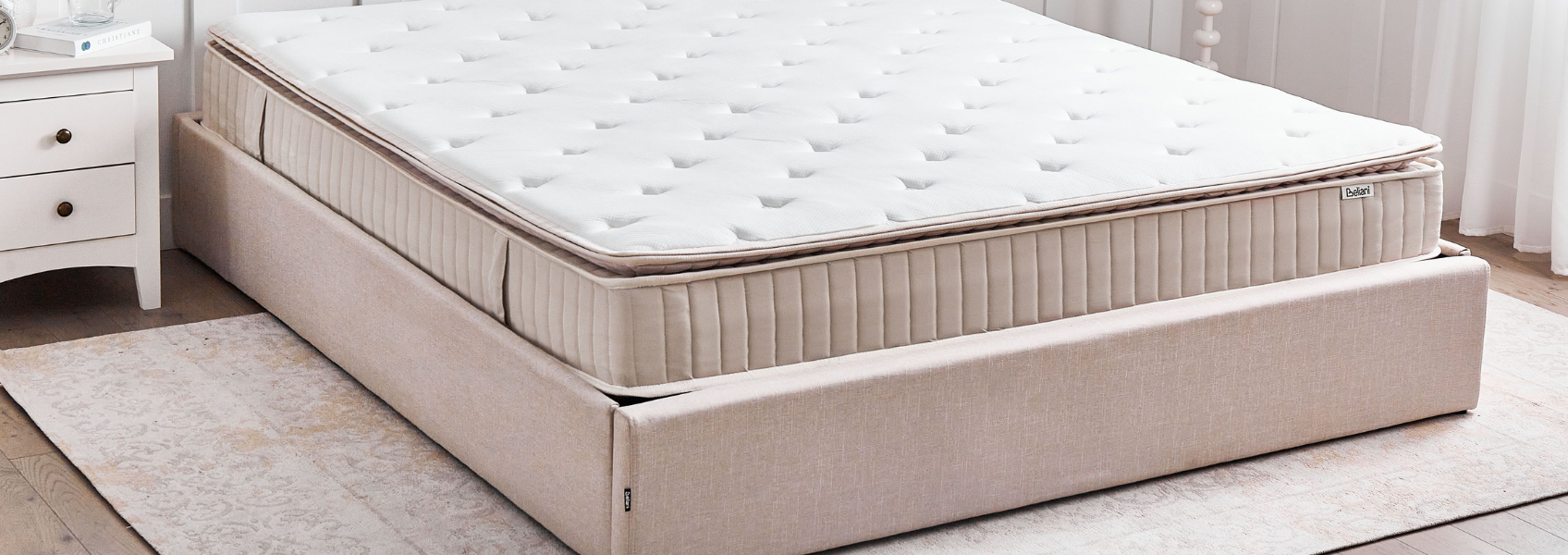
A mattress only works if its type, firmness and size actually match how you sleep. This guide walks through all three, then covers lifespan, care and the questions people ask most before buying.
In short
How do you choose the right mattress?
Choose a mattress by matching its type, firmness and size to how you sleep, your body weight and your bed frame. Side sleepers generally need more contouring, while back and stomach sleepers usually benefit from firmer support.
Three things to get right
Every good mattress choice comes down to the same three decisions, in this order.
01
Pick the mattress type
Foam, spring, latex, gel or hybrid: each has a different feel, temperature and lifespan. Match it to what matters most to you before anything else.
02
Match firmness to how you sleep
Side, back and stomach sleepers each need a different firmness range for proper spinal alignment. Body weight shifts that range further.
03
Confirm the size
Check the mattress fits your bed frame and room before deciding anything else, since size rules out options the fastest.
Quick answer
- Side sleepers: medium to medium-soft, in memory foam, latex or hybrid.
- Back sleepers: medium-firm to firm, in spring, latex or hybrid.
- Stomach sleepers: medium-firm to firm, to stop the spine arching.
- Over 110kg: lean firmer regardless of position, for consistent support.
- Replace every 7–10 years, sooner for entry-level spring mattresses.
Which mattress type is best?
Every mattress type trades off support, temperature, motion isolation and price differently. Here's how the main constructions compare, followed by more detail on each.
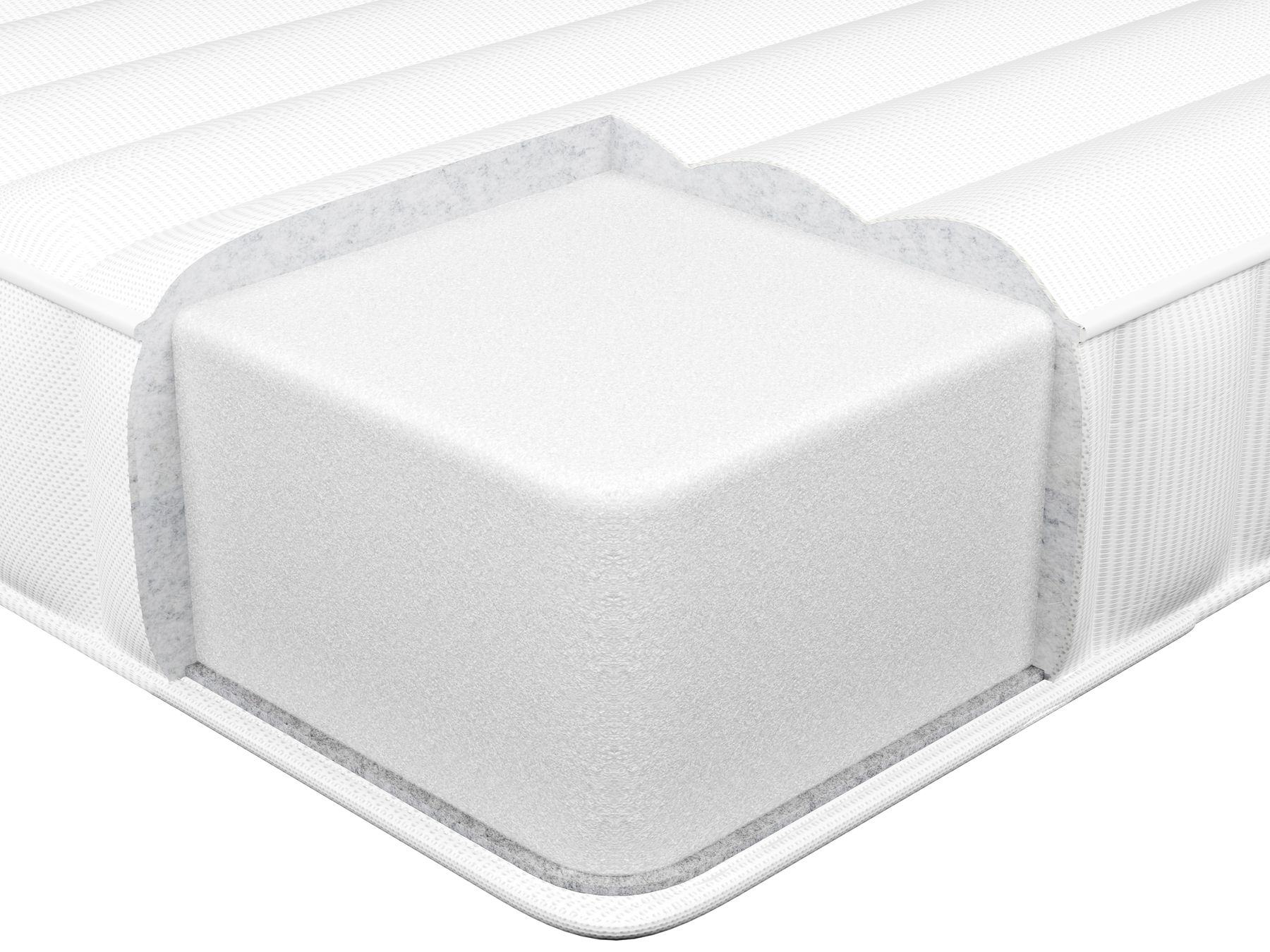
Foam mattress
What's inside: High-density foam, different form depending on a mattress type
How it works: Surface adjusts to the body's contours, giving off the feeling of sinking in
Foam mattresses have become popular for their ability to provide customised support, but there are distinct differences between classic foam and memory foam. While they both provide customised support and are available in various firmness levels, memory foam is distinguished by its superior conforming ability, pressure relief, and motion isolation, making it particularly suitable for those seeking a highly personalised sleeping experience and excellent partner disturbance reduction. Classic foam offers a more resilient and breathable surface with good support at a generally lower cost.
Foam mattresses have become popular for their ability to provide customised support, but there are distinct differences between classic foam and memory foam. While they both provide customised support and are available in various firmness levels, memory foam is distinguished by its superior conforming ability, pressure relief, and motion isolation.
This makes memory foam mattress particularly suitable for those seeking a highly personalised sleeping experience and excellent partner disturbance reduction. Classic foam offers a more resilient and breathable surface with good support at a generally lower cost.
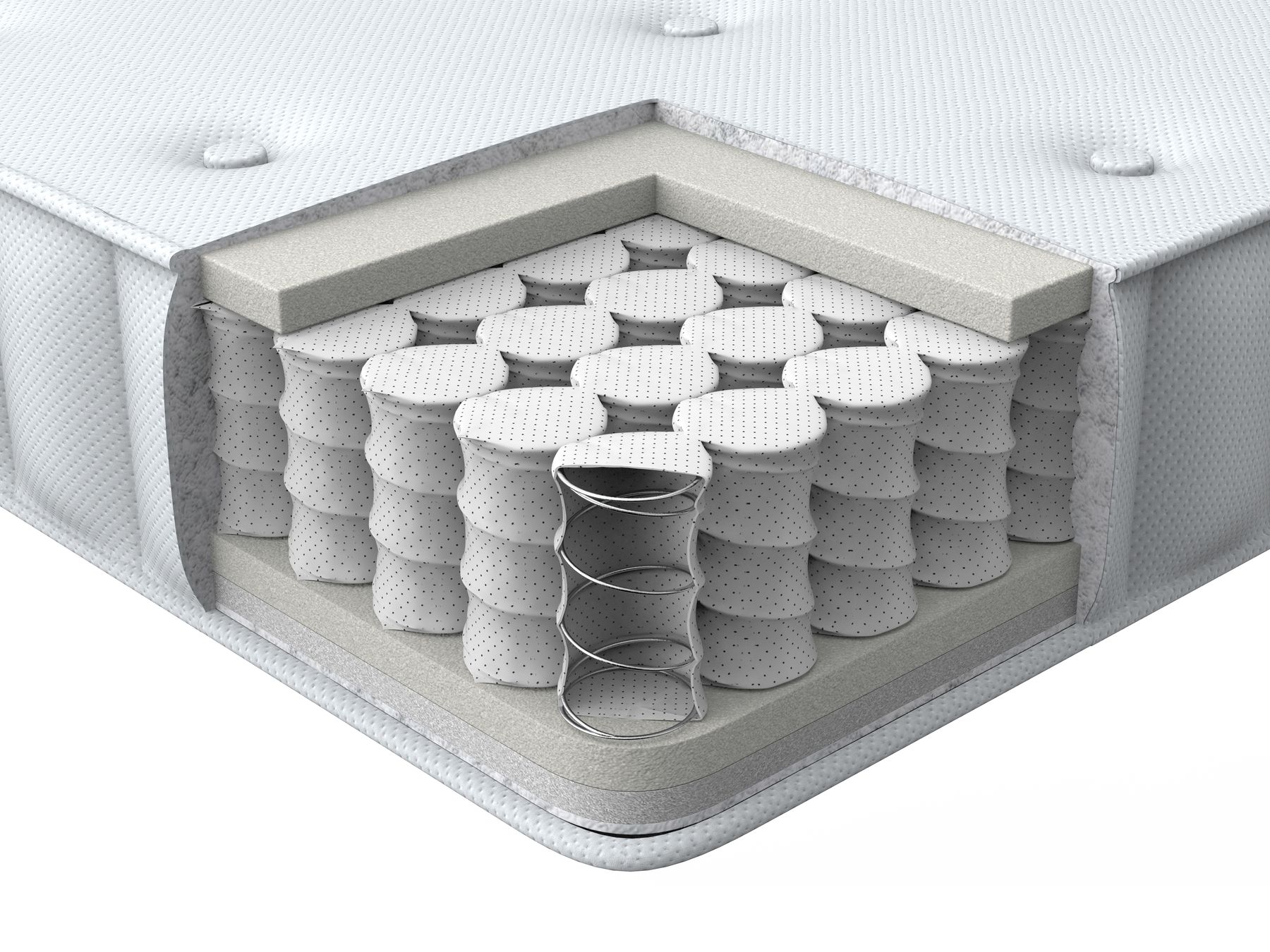
Spring mattress
What's inside: Multiple pockets that hold springs, wrapped in several layers
How it works: Individual pockets adjust to the pressure points, ensuring proper body support
Spring mattresses, on the other hand, are often a traditional bedding choice known for their durability. They contain a system of coils that offer responsive support and distribute your body weight evenly. They excel at promoting airflow, ensuring a cooler sleep experience. While they may not contour as closely to your body as foam mattresses, spring mattresses provide a supportive and resilient surface, which can be advantageous for individuals who prefer a firmer feel or those who value the classic bounce of a traditional mattress.
Spring mattresses, on the other hand, are often a traditional bedding choice known for their durability. They contain a system of coils that offer responsive support and distribute your body weight evenly. They excel at promoting airflow, ensuring a cooler sleep experience.
While they may not contour as closely to your body as foam mattresses, spring mattresses provide a supportive and resilient surface, which can be advantageous for individuals who prefer a firmer feel or those who value the classic bounce of a traditional mattress.
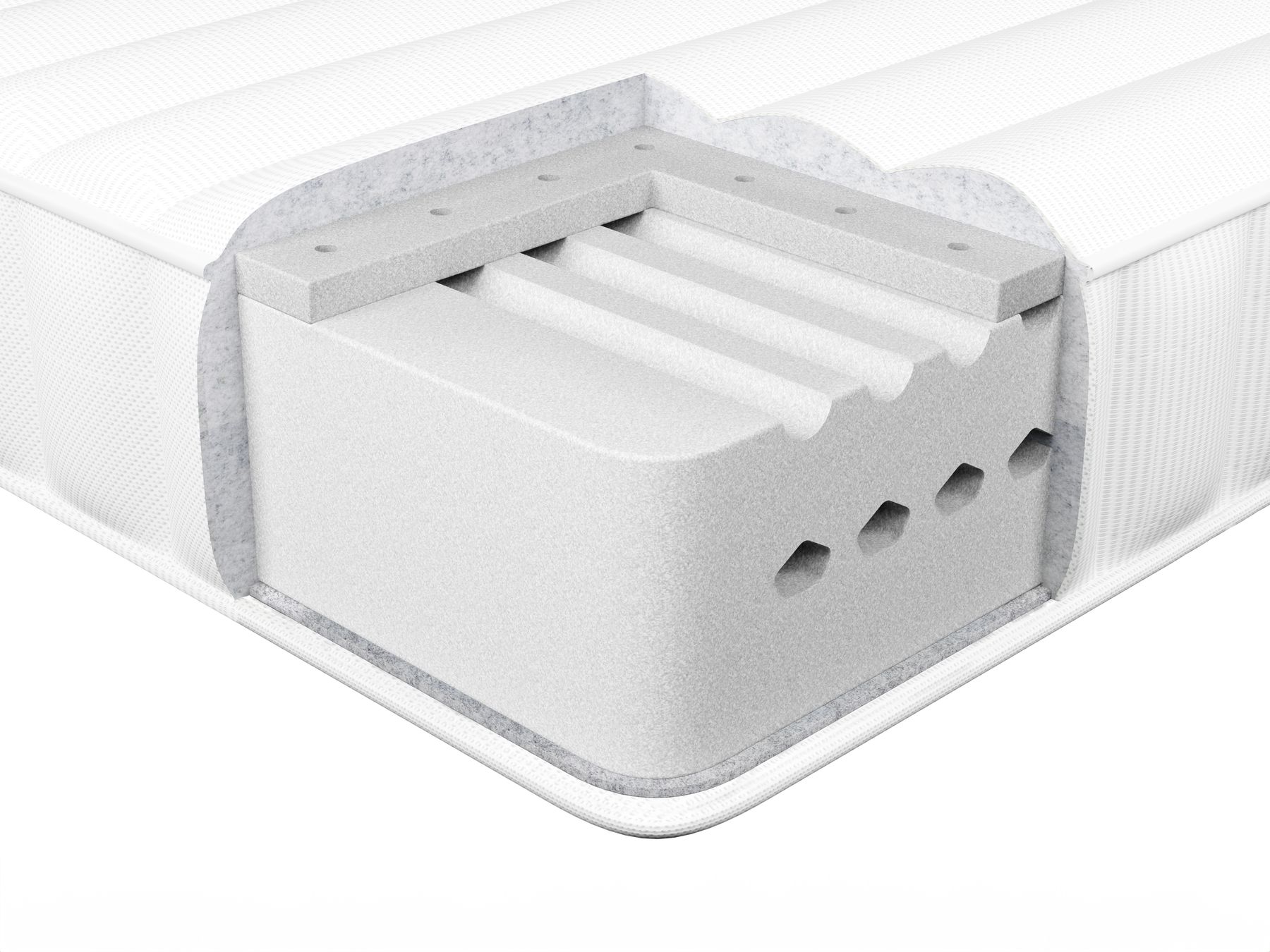
Latex mattress
What's inside: Natural latex foam derived from rubber tree sap
How it works: Conforms to the body's contours, providing even support, and promoting airflow for
a comfortable and pressure-relieving sleep experience
Latex mattresses, made from the sap of rubber trees, offer a unique blend of comfort and sustainability. Their natural composition and resilience provide exceptional support and longevity, making them a preferred choice for eco-conscious individuals. Latex mattresses are recommended for those seeking a hypoallergenic, dust-mite-resistant option with excellent motion isolation, catering to couples or light sleepers.
Latex mattresses, made from the sap of rubber trees, offer a unique blend of comfort and sustainability. Their natural composition and resilience provide exceptional support and longevity, making them a preferred choice for eco-conscious individuals.
Latex mattresses are recommended for those seeking a hypoallergenic, dust-mite-resistant option with excellent motion isolation, catering to couples or light sleepers.
Gel mattress
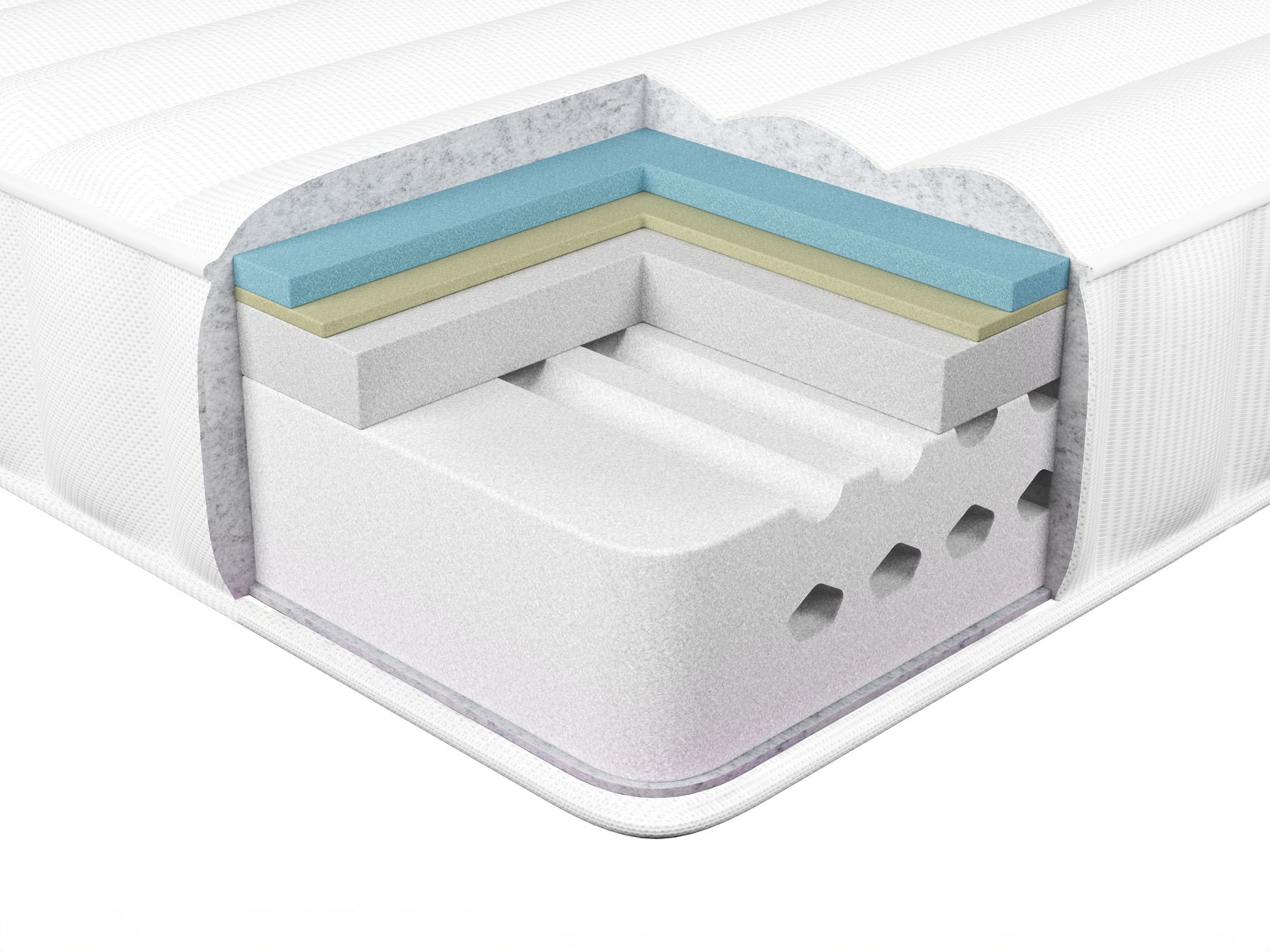
What's inside: Gel-infused memory foam
How it works: Regulates temperature, creating a cooler and more comfortable sleeping surface
Gel mattresses are a fantastic choice for those seeking a cooler and more comfortable night's sleep. These mattresses typically feature a layer of gel-infused memory foam that helps disperse body heat, ensuring a refreshing and cool surface. They are ideal for hot sleepers, and their pressure-relieving properties make them suitable for individuals with back pain or joint issues. The gel layer conforms to your body, providing exceptional support and spinal alignment, making it a great option for people searching for a comfortable and temperature-regulated mattress.
Gel mattresses are a fantastic choice for those seeking a cooler and more comfortable night's sleep. These mattresses typically feature a layer of gel-infused memory foam that helps disperse body heat, ensuring a refreshing and cool surface.
They are ideal for hot sleepers, and their pressure-relieving properties make them suitable for individuals with back pain or joint issues. The gel layer conforms to your body, providing exceptional support and spinal alignment, making it a great option for people searching for a comfortable and temperature-regulated mattress.
What mattress firmness is best for your sleeping position?
Firmness needs change with how you sleep. Here's what each position needs from a mattress.
Beyond firmness, each position has its own priority: side sleepers need the mattress to contour closely at the shoulders and hips, back sleepers need minimal sinkage to keep the spine's natural curve, and stomach sleepers need enough lift to stop the hips dropping and the lower back arching.
Mattress firmness and body weight
Body weight has the clearest effect on which firmness will actually support you, on top of sleeping position. Heavier bodies sink further into any given foam or spring, so they generally need a firmer surface to get the same support a lighter person feels on medium. As a rough guide: under 60kg tends to suit soft to medium, most sleepers up to around 110kg do well on medium, and anyone heavier, or any dedicated stomach sleeper, is usually better on firm.
Still unsure? A double-sided mattress with two firmness levels, one on each side, lets you flip and compare rather than committing to one feel.
What are the standard mattress sizes?
Match the mattress size to your bed frame and room before firmness or type — the wrong dimensions rule out every other choice.
What is a 7-zone mattress?
A 7-zone mattress divides the sleeping surface into seven areas, each with different firmness, so the head, shoulders, lumbar region, hips and legs each get exactly the support they need instead of one uniform feel across the whole bed.
- Optimal support: targeted firmness at the lower back, neck and shoulders reduces pressure points.
- Pressure relief: weight is distributed away from the hips and shoulders, helpful for chronic pain.
- Spinal alignment: support is placed where it's needed most, keeping the spine in a neutral line.
- Motion isolation: reduces disturbance from a partner's movement through the night.
- Circulation: even weight distribution reduces numbness from sleeping in a fixed position.
- Works for any position: suits back, side and stomach sleepers without needing a fully custom build.
Mattress lifespan and maintenance
Most mattresses last 7 to 10 years with proper care. Foam and latex sit at the longer end of that range; entry-level spring mattresses often need replacing closer to 6–8 years under daily use. Two features worth checking before you buy: handles, which make flipping or rotating easier, and a removable, OEKO-TEX certified cover, which simplifies cleaning and matters most if you have allergies.
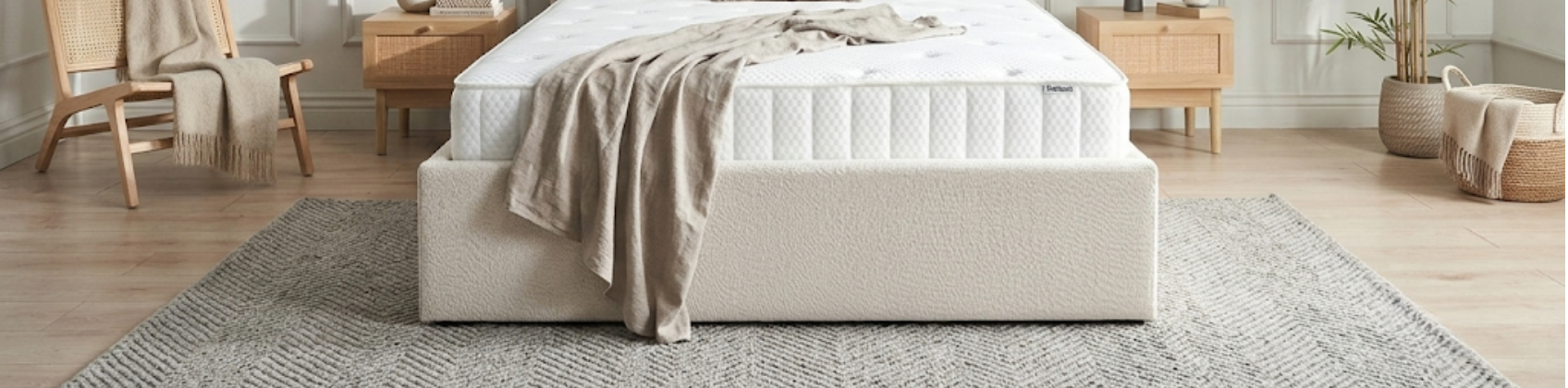
- Rotate the mattress every 3 to 6 months to wear it evenly and prevent sagging.
- Use a mattress protector to guard against spills, stains and dust mites.
- Vacuum periodically to clear dust and allergens, and air it out with open windows when you can.
- Avoid standing or jumping on it, which can damage springs or foam layers permanently.
- Flip a double-sided mattress occasionally for even wear across both sides.
Shop now: mattresses
Accessories that extend a mattress's comfort
Not ready to replace the mattress but want it to feel different tonight? A topper or protector changes the feel and adds protection without a full replacement, and pairing it with the right duvet and pillows rounds out the setup.
Shop now: duvets and pillows
Frequently asked questions
What is the best mattress firmness for back pain?
Medium-firm mattresses are generally recommended for back pain because they support the spine's natural curve without letting the hips and shoulders sink too deeply. Side sleepers with back pain often do better on medium, while stomach and back sleepers typically need medium-firm to firm.
How often should you replace a mattress?
Most mattresses should be replaced every 7 to 10 years. Foam and latex mattresses tend to last toward the higher end of that range, while entry-level spring mattresses may need replacing closer to 6 to 8 years, especially with daily use.
What is the difference between memory foam and latex mattresses?
Memory foam conforms closely to the body and slowly returns to shape, giving strong pressure relief and motion isolation but retaining more heat. Latex is more responsive and bouncier, sleeps cooler, and is naturally hypoallergenic and dust-mite resistant, but doesn't contour quite as closely as memory foam.
What mattress firmness is best for side sleepers?
Side sleepers generally need a medium to medium-soft mattress in memory foam, latex, or hybrid construction. This allows the shoulders and hips to sink slightly for spinal alignment while the rest of the body stays supported.
What are 7-zone mattresses good for?
7-zone mattresses divide the surface into seven areas with different firmness levels, giving firmer support under the shoulders and hips and softer support under the legs. They suit most sleeping positions and are a good choice for anyone wanting targeted pressure relief and spinal support without needing a fully custom mattress.
What are the standard European mattress sizes?
Standard European mattress sizes are: Small Single 80x200cm, Single 90x200cm, Small Double 120x200cm, Double 140x200cm, King 160x200cm, and Super King 180x200cm.
Do heavier people need a firmer mattress?
Generally yes. People over around 110kg tend to sink further into softer surfaces, so a firmer mattress, or one with reinforced support layers, holds its shape better and gives more consistent support over time.
