
 Free Delivery & Return
 365-Day Returns
 10 Million Happy Customers
 500,000 Products in Stock


Extending Tables


Extending Tables
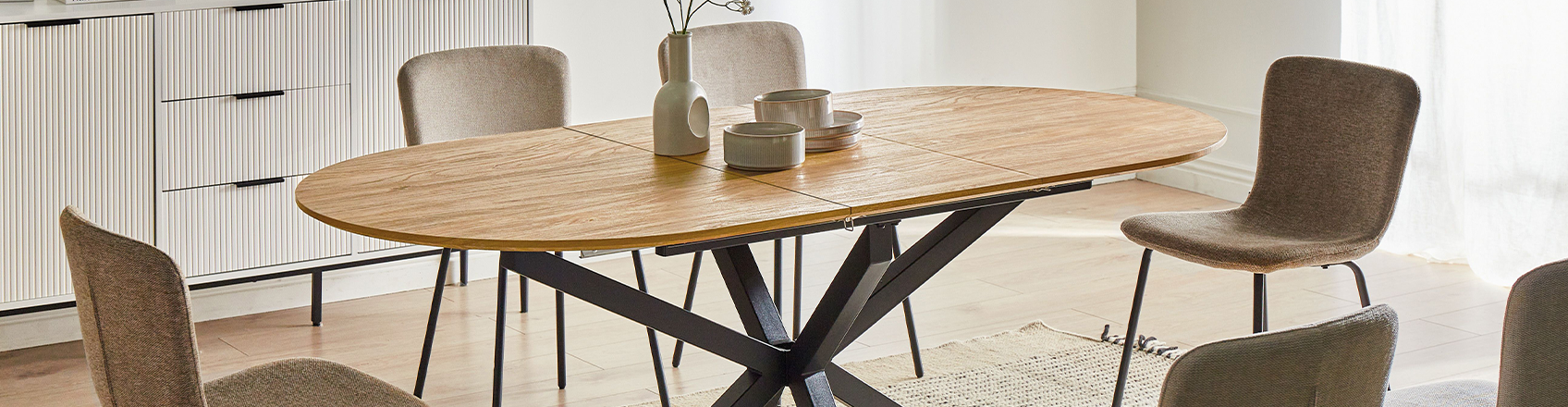
Whether you are the person who likes hosting big events or simply wants the option of a bigger table in the house, the extending table is the move. Find out the key aspects to consider when choosing the perfect fit for your space.
What material options are available for extending tables?
When choosing an extending table, the material plays a crucial role in both aesthetics and durability. Solid wood tables, such as those made from rubberwood, are known for their longevity and strength, but they can come with a higher price tag. For a more budget-friendly option, MDF offers a similar look to solid wood while being more affordable.
The finish of the tabletop also adds character to the table. Marble tops, for example, bring a touch of glamour and elegance to more luxurious interiors, while a travertine effect gives a raw stone appearance, ideal for industrial-style spaces. Veneer finishes, which mimic the natural grains of real wood, are another popular choice, offering the beauty of wood at a lower cost.
In addition to the tabletop, the base material and shape are essential for both stability and style. Metal base, made from iron or steel, offers a modern and industrial look, while a solid wood base provides a more traditional and robust feel. A few base shapes can be differentiated:
- Pedestal: A single central support offering ample legroom, ideal for larger tables.
- X-shaped: Crisscrossed support adds both stability and visual appeal.
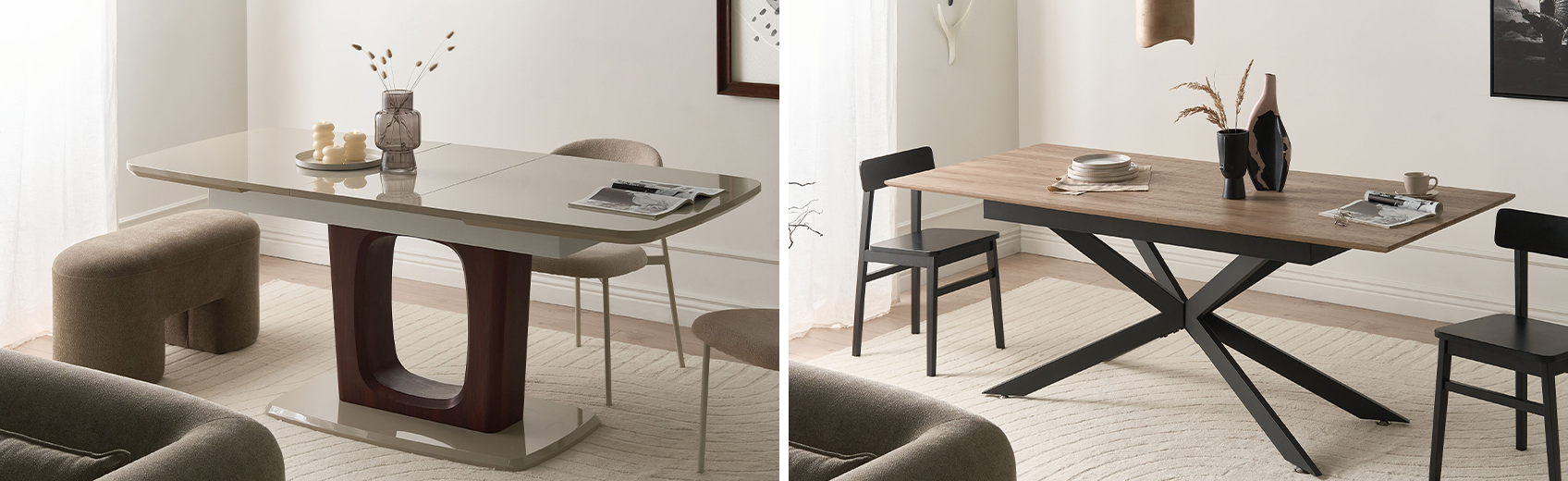
- Trestle: Two or more supports connected by a horizontal beam, great for longer tables and a rustic look.
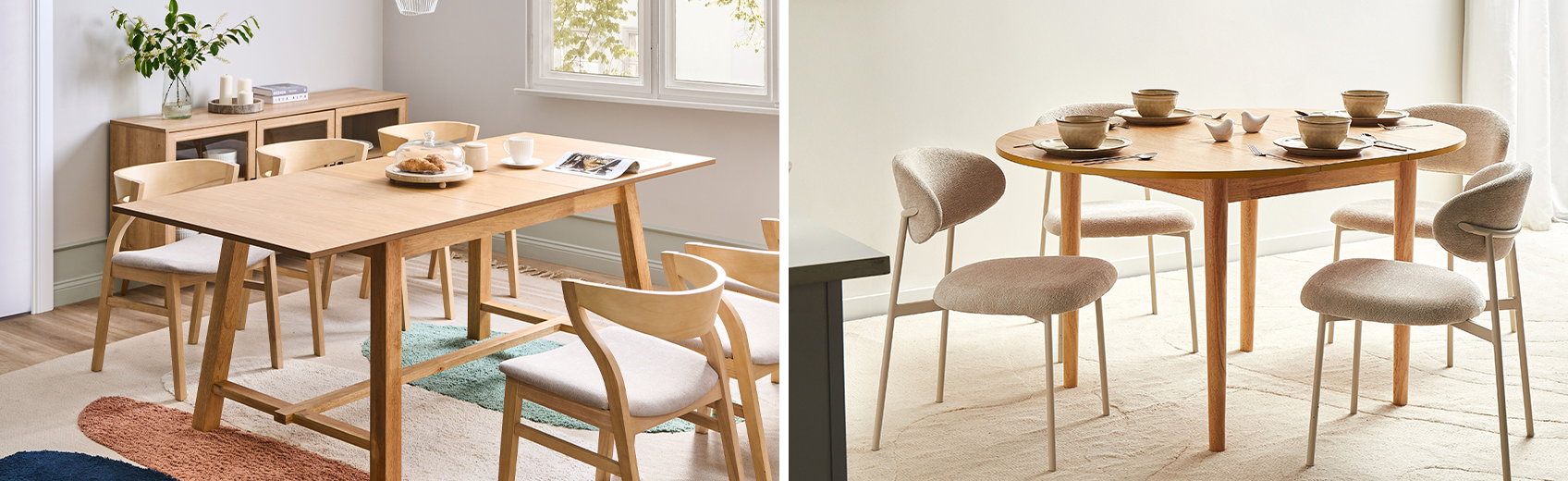
- Four-legged: A classic design providing stability, perfect for most settings.
How to choose the right size of an extendable table?
Consider these factors when choosing the right size for an extending table:
- Measure the space: Define the area where the table will be placed and take all needed measurements. Leave at least 90 cm of clearance on each side for chairs and movement. Estimating this space will allow you to make enough room around the table for people to move comfortably.
- Consider seating capacity: Determine how many people you usually need to accommodate. A standard dining table of 140-180 cm usually seats 4-6 people, but with an extending top, you can adjust it to fit 6-10 people for larger gatherings comfortably.
- Room functionality: If the table is placed in a multifunctional area like a dining or living room, make sure it’s easy to extend and store away when not needed. It should blend seamlessly with the rest of the furniture without dominating the space.
- Shape: Extending tables are available in different shapes, such as rectangular, oval, and round. While rectangular tables are the most common, round tables offer more flexibility by ensuring equal spacing between all seats when extended.
What types of extension mechanisms are there?
Butterfly leaf
Involves a hinged extension leaf stored underneath the table. When the table is extended, the leaf folds out like a butterfly’s wings, creating additional surface area.
Drop-leaf
Features one hinged leaf at one end of the table that can be raised or lowered. When extended, the leaf folds up to provide extra space, and when not in use, it folds down to save space.
Self-storing
Includes an extra leaf stored underneath the table when not in use. It can be pulled out easily and placed into the table’s open space for extension.
Traditional
Typically involves a separate, removable leaf stored separately or underneath the table when not in use. The table is pulled apart to create space in the centre, and a leaf is manually placed into the gap.
Flip-top
Where the table top is divided into two sections. One section is hinged and can be flipped open to reveal an additional leaf underneath the table. When flipped, this leaf extends the table’s surface, providing extra seating space.
How to store extra leaves?
Proper storage of extension leaves is vital to prevent warping or damage. If your table features self-storing or butterfly mechanisms, the leaves are protected within the table frame. However, for traditional removable leaves, it is best to store them in a climate-controlled environment (avoid damp basements or hot attics) to prevent the wood from expanding or contracting. Ideally, store them flat or vertically in a protective leaf bag to avoid scratches and ensure they match the table’s alignment for years to come.
How to clean and maintain your tabletop?
Different materials require specific care to keep them looking brand new:
- Solid wood and veneer: Use a soft, damp cloth with a mild detergent. Always wipe in the direction of the grain and dry immediately to prevent water rings. Periodically apply a high-quality furniture wax to solid wood to maintain its lustre.
- Wood-like materials: Avoid excessive moisture, as it can cause the material to swell. Use a nearly dry microfiber cloth for dusting and cleaning spills.
- Metal: Simply wipe with a damp cloth and dry thoroughly to prevent oxidation or rust, especially in humid environments.
How to keep the extension mechanism functioning smoothly?
To ensure your table opens effortlessly every time, a little preventative maintenance goes a long way. Dust the sliding tracks regularly using a vacuum attachment or a soft brush to remove debris that can cause sticking. If the mechanism feels stiff, apply a small amount of dry silicone spray or clear furniture wax to the wooden glides or metal runners.