
 Free Delivery & Return
 365-Day Returns
 10 Million Happy Customers
 500,000 Products in Stock

Vacuum gently
Vacuum it gently, top to bottom, with a low-suction setting and a soft textile nozzle
Reviewed by the Beliani Content Team · Updated November 2026
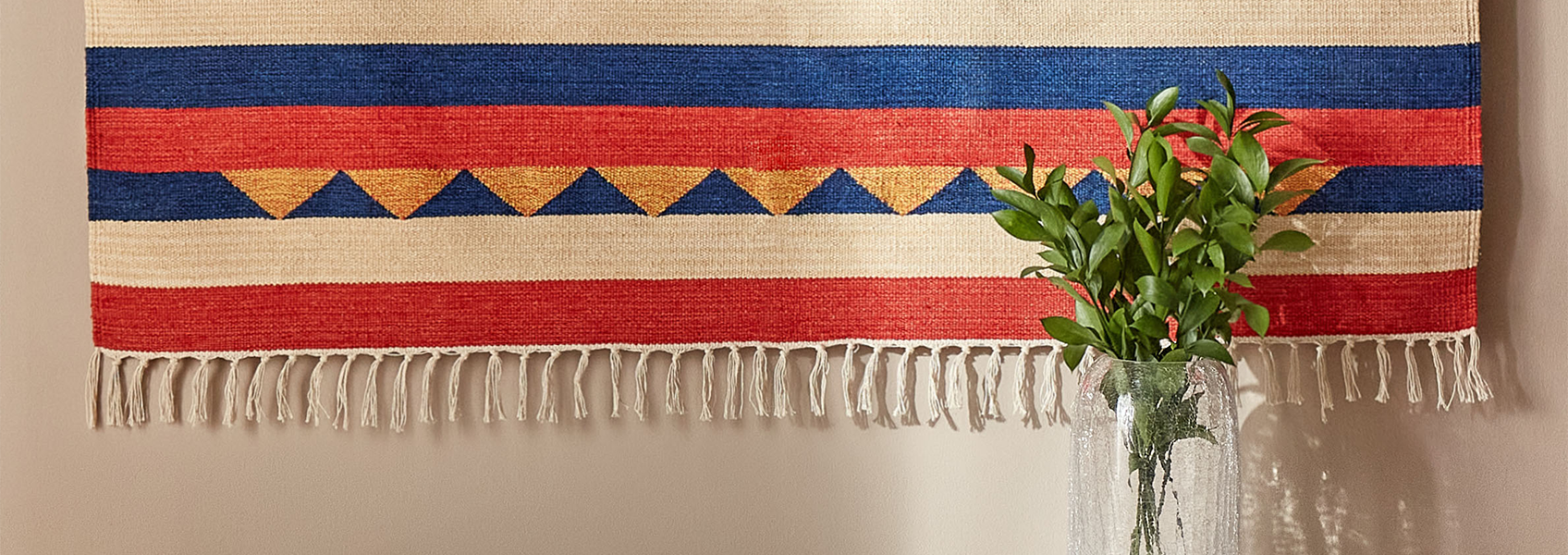
Hanging a rug on the wall has become a recurring favourite in interior design, and for good reason: it turns a textile into a striking, one-of-a-kind piece of art. It also gives a rug a second life once it's too precious, too patterned, or too worn for the floor. This guide covers which rugs hang best, how to prepare and mount one safely, and where it makes the biggest impact in a room.
In short
For most rugs, sew a fabric sleeve or pocket along the top back edge, slide a slim rod through it, and mount the rod on wall brackets rated for the rug's weight. This spreads the tension evenly across the whole width instead of pulling on a few points. The best method still depends on the rug itself:
Every rug can work as wall art, but some choices make the result easier to live with and easier to hang safely.
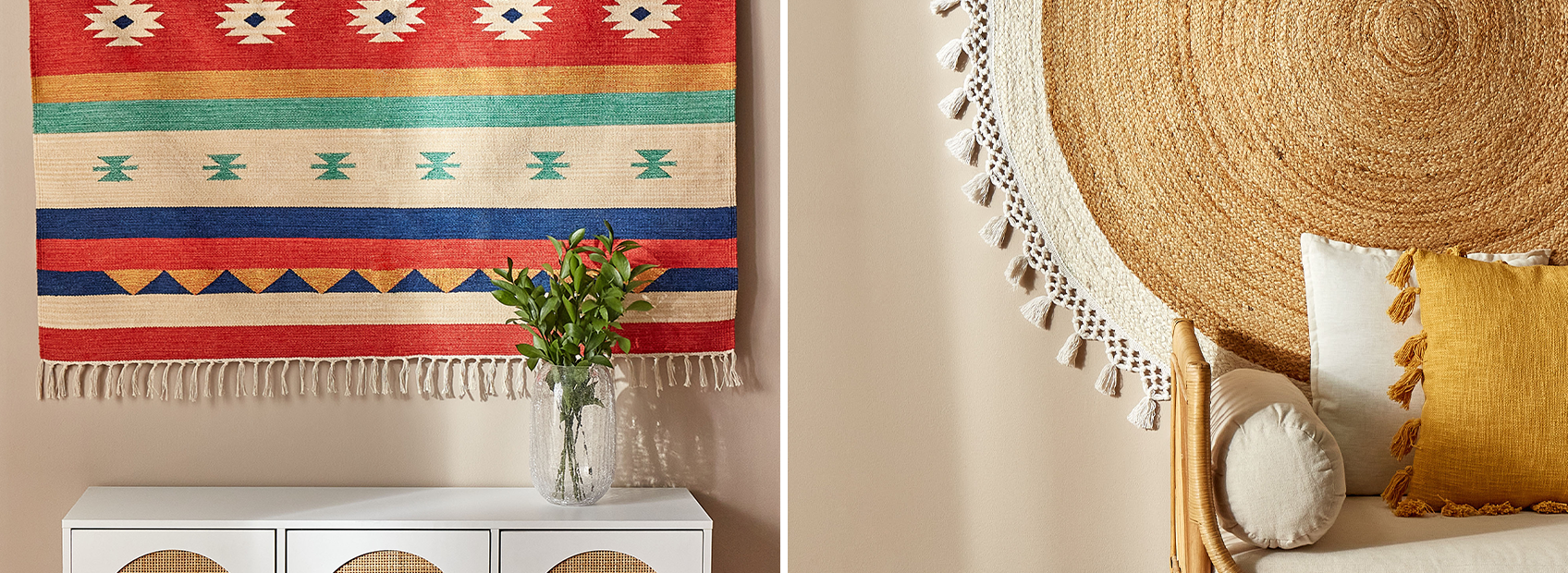
A few minutes of preparation protects both the rug and the wall.
The right method depends mainly on the rug's size, weight and value. These are the most reliable options:
| Method | Best for | How it works |
|---|---|---|
|
Fabric sleeve and rod
|
Best for Medium to large rugs, including most wool and kilim pieces | How it works A fabric pocket is sewn along the top back edge; a slim rod slides through it and rests on wall brackets, spreading the weight evenly |
|
Velcro on a wooden batten
|
Best for Light rugs, flatweaves, and pieces you'll want to rotate or remove often | How it works One side of heavy-duty Velcro is sewn to the rug, the other fixed to a batten on the wall; reversible and easy to take down for cleaning |
|
Clamps or a hanger bar
|
Best for Larger, sturdier rugs, especially in living areas | How it works A bar with several evenly spaced clamps grips the top edge; use enough clamps across the width so no single point carries too much weight |
|
Box frame
|
Best for Small, rare or fragile pieces and fragments | How it works The rug sits inside a frame or behind glazing that doesn't compress the fibres, giving it an art-like, fully protected display |
Don't drive nails or staples through the textile, and don't rely on glue or double-sided tape on the back; both can damage the fibres and fail without warning. Using only two or three clips or hooks on a large or heavy rug concentrates all the weight on a few points, so spread the support across a batten or rod instead. Whatever method you choose, plan how the rug will come down again for cleaning before you install it.
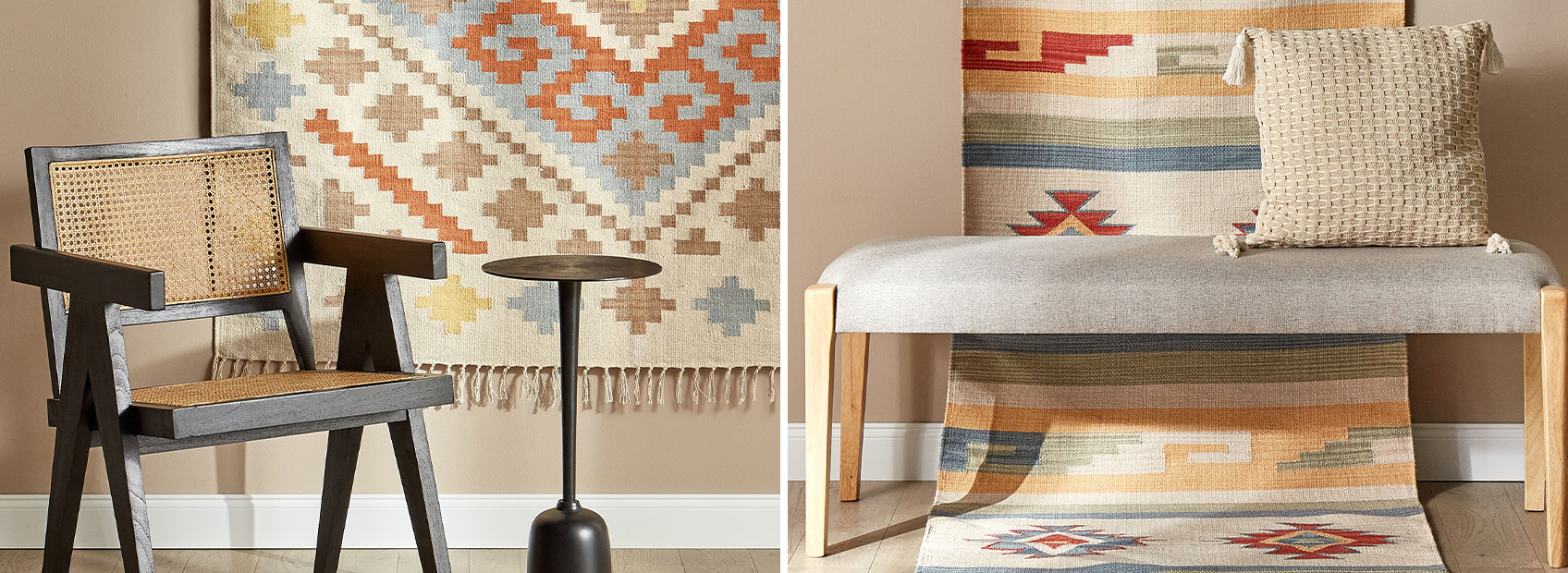
Living room
A large rug above the sofa works as a feature wall; a horizontal format suits wide furniture, while a vertical one suits a narrow wall or corner. Two smaller rugs crossing each other, or pairing a patterned rug with plain cushions, both work well here too.
Bedroom
Hang the rug above or behind the bed as a textile headboard, at least as wide as the bed frame and not too high above it. A flatweave or short-pile rug stays easiest to keep clean here.
Hallway
A vertical rug in a narrow hallway adds depth in the same way a sequence of pictures would, and a smaller piece reads more clearly than a large one in a tight space.
Dining room
Place it behind the table rather than near the kitchen, keeping it away from radiators, steam and cooking odours that can settle into the fibres over time.
A gallery wall swaps one large statement rug for a considered group of smaller ones, and it works best when the pieces are chosen to sit together rather than compete.
A hung rug needs less upkeep than a floor rug, but it still benefits from regular, gentle attention.
Vacuum it gently, top to bottom, with a low-suction setting and a soft textile nozzle
Never beat or shake a rug while it's hanging; this stresses the hanging system rather than just the rug
Rotate the rug occasionally to avoid uneven fading if it gets strong natural light
Keep it away from radiators, heaters and other direct heat sources
Check the hanging system periodically, since rods, Velcro and clamps can loosen over time
Use a professional cleaner for valuable, antique or fragile pieces
Once you've chosen a rug and a method, run through this list before you start.
Not ideally. Flatweaves and low-pile rugs hang cleanly and stay lightweight, while long-pile or shaggy rugs are heavier, harder to support evenly, and collect more dust once vertical. If you want to hang a thicker pile rug, choose a smaller size and a method that spreads its weight across a batten or rod.
Not if the weight is spread evenly. A sewn sleeve, pocket or batten across the full width protects the fibres, while nails, staples, glue or just two or three hooks concentrate the weight on a few points and can stretch or tear the rug over time.
Yes. Run your hand over the rug from top to bottom before hanging it: the pile should feel smooth and lie flat in that direction, the same way it would if the rug were still on the floor. Hanging it upside down changes how the colours and texture catch the light.
Yes, this is one of the most popular uses for a wall rug. Choose one at least as wide as the bed frame, and keep it as a lighter flatweave or short-pile rug so it stays easy to keep clean above where you sleep.
Vacuum it gently, top to bottom, using a low-suction setting and a soft textile nozzle rather than beating or shaking it on the wall. Rotate the rug occasionally to avoid uneven fading, and keep it away from direct sun, radiators and damp walls.
If an account with this email exists, you’ll receive an email with instructions to reset your password.
Log in